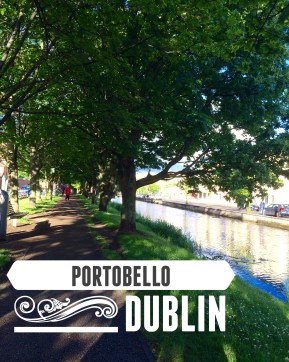
House (Flat) Hunters: Dublin

Hello all! So this post has been brewing for awhile, but I thought I’d give myself some time to de-stress after all my house hunting woes were finally settled. So here goes…

Dublin is currently experiencing a housing crisis. With the influx of university students returning for their new semester combined with the increasing number of businesses setting up their headquarters in Dublin (which is due to low business taxes and Brexit making London a less appealing startup location), it makes the perfect recipe for the shark tank that is the real estate market (no seriously, if they smell blood, you’re a goner).

Not only is living in Dublin, especially anywhere near the City Centre, expensive, it’s also extremely competitive to actually obtain a lease. I looked obsessively for apartments for about a month and a half before I finally got one. I was constantly (this is not an exaggeration) prowling the various renting sites looking for places in my price range and in the area I wanted.

So let’s start with the basics: where to search for housing. There are multiple sites that specialize in housing in Dublin, like Rent.ie and Daft.ie. Plus the classic craigslist option (but beware, there are catfishes GALORE here, so I wouldn’t even chance it). I personally found that the best website to look at was Daft, which had the widest selection of properties and usually the most up to date listings of all the sites. Here you can search for apartments/flats and houses to rent, as well as house shares and short term lets, which might be more convenient depending on how long you plan to stay in Dublin/your price range. Make sure that you have a maximum price range in mind going in, and if you find a place that seems to fit the bill ask whether the bills are included in the price because it can vary.

When you go into daft you’re initially prompted for an area you want to look at, as well as a category (rent, buy, share). Put in your desired region and type of property, then search. That will bring you to a page of properties, BUT next click on the “Advanced Search” button. This will allow you to narrow the results by number of rooms, price, etc.

untitled

After you do this, you’ll be presented with a full list of all the viable properties in the area you selected. I found that the best thing to do was to every morning do a search and filter it by “Date Entered.” That way, any time a new property is listed, you can easily see it. Another thing I found handy was to use the Map View, which shows you an interactive google-style map of Dublin, and marks where flats/apartments within your search perimeters are. If you see little numbers on the map, that signifies a cluster of properties in one area, if you zoom in you’ll see them all specifically. This feature is great because it allows you to see exactly where properties are in the scheme of the city, as opposed to looking at the properties in the list view and having to google their location to check where they are (because just because it’s “Dublin 8” doesn’t mean you’re going to be looking over the canal).

Once you find a place that you like email or call the realtor/renting agent immediately. Rooms and flats get snapped up extremely quickly, so you want to make an appointment to view as soon as possible if you find a place you like. I found that if you called, it was easier to get a time for a viewing, as they receive tons of emails every day and are more proactive about the people who take the time to call.

Once you have a viewing set up, be prepared for a crowd. There were multiple times where I would show up for a viewing I had scheduled and there would already be tons other groups of people there to see the same place.

So, if you’re serious about finding an apartment bring a landlord reference and proof of employment/sufficient funds documents with you to the viewing. Most apartments or houses to rent will ask you to provide these documents anyway, so if you have them on hand, you can make an offer immediately and have a better chance at getting the place if it’s something you want.

If your offer is accepted, the first thing you’ll need to do (after you break out into song and dance), is pay your deposit and first month’s rent, as well read over/discuss the lease agreement. Make sure you’re not locked into something you can’t handle. Also, be prepared for most leases to be 12 months, anything less is a little bit rarer to find (and would be more common if you’re doing some sort of house share/sublet).

All in all, it’s a pretty stressful experience, but if you keep at it you’ll eventually have luck (hopefully, if not you can set up a very homey box in St. Stephen’s Green and call it a day). My housemate and I moved into our flat about a month ago and the comfort of having your own place in Dublin makes it much easier to feel at home.

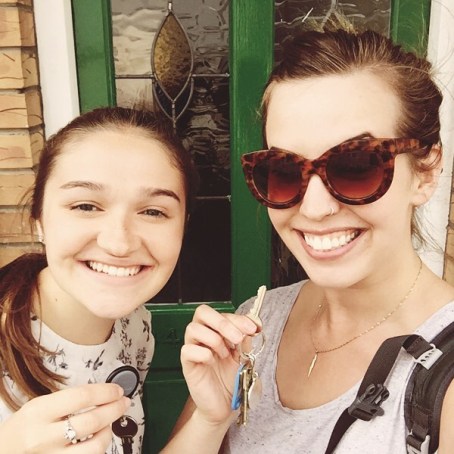
So here’s a photo of my flatmate Hanna and I almost crying with joy as we received our keys and good luck with your search!!
14117891_10210254884912578_6342976206951938758_n


Irish Bank Accounts – The Final Step (!)

Do you see that in the distance? That’s the finish line! You’re so close to being done with all these boring processes. Run Forrest, Run!

So once your form 12A comes back, you’ll be home free and ready to make that bank appointment. In order to open an account you’ll need identification (passport is best) and proof of address. Your proof of address must be one of the following options: a utility (gas or electricity) bill in your name, your 12A or a health/motor/house insurance document. The easiest and most attainable for working holiday participants is the 12A.

Firstly, you’ll have to choose your bank, for me Permanent TSB was the best option as they have an account called an Explore Account which seemed easy to set up/most appropriate for my situation. They give you 10 cents back each time you use the card (up to 5 euro, but that’s two cans of Bulmers from Spar) which was a nice little plus. However, there are multiple other banks in Ireland that you could look into opening an account with (Bank of Ireland, AIB, Ulster Bank).

Since I work weekdays and by the time I get home the bank is closed (damn you business hours!!), I called in and made an appointment to set up an account on a Saturday. Permanent TSB has extended hours until 8pm on Thursday and limited Saturday hours at their Grafton Street branch, so make sure you call in to book one of those times if you’re unavailable during the day. If you’re free during the day, however, you can book an appointment online during regular business hours and plan it at your leisure.

When I got there I was taken to the upstairs offices where a very nice woman named Bernie took me through the steps of registering my account. She made copies of my passport and 12A and asked basic questions like where I was living, my job title/salary, how many credit cards/bank accounts I had, etc. Once all that was done and the necessary documents were signed, I made a password for my online account.

Unfortunately, your account isn’t formally open at the end of your appointment, so I wasn’t able to deposit the checks I’d had saved up that day. *Side note, in Ireland it takes five business days for checks to clear which is eternally frustrating, but it is what it is.* By the next business day (the Monday after my Saturday appointment) my account was registered and I deposited what I had into the kiosks they have in their branches.

They said that it would take about three business days for me to receive the pin for my card and then it would be up to three business days after that for me to receive my actual debit card. Which to me makes no sense because why not send them together? Or send the card first? But I have long since stopped questioning the random, long and rambling processes. My pin ended up coming on the Thursday of that next week and I was dreading having to wait all the way until Tuesday for my card, but to my surprise it came the next day (which in retrospect was bad because then  I was so excited to have access to my funds I went a little bit overboard on pub charges that night…)!

Once you have your bank account set up, you’ll be ripe and ready to take on the world as a fully functional, official Working Holiday participant. You can also set up direct deposit if your job has access to that, which will eliminate the five days of waiting for checks to clear (hallelujah).

And that, my friends, is all she wrote on the multi-tiered process of getting set up. Congrats if you’ve gotten to that point, if not, hang in there! Any questions, don’t hesitate to drop me a comment (or if you just want to vent about how frustrated you are, I will be 100% willing to join you in commiseration).


Form 12A – A Title as Boring as the Form Itself

So once you get your PPS number sent to you you’ll be ready to send off your form 12A. This is the second to last step in the process, which will then allow you to set up your bank account (yas).

***UPDATE: So as of 2017, the 12A has morphed into the form 12 which you can do online on your revenue.ie account. When you sign up for revenue.ie, it takes five business days for them to send you your password in the mail (assuming you don’t have an Irish drivers license, which if you do fair play to you, but the rest of us peons need to wait). Once you get your password you can set up your account fully and have access to all the revenue features online!

The form is is similar to to the W-9 if you’re from the US, essentially you’re filling out your information (where you live, how many dependents you have, whether you’re married or single, your income) to figure out how much you should be taxed and how much credit you’re owed in future.

You can find the link to the 12A pdf on the Revenue website here and I would recommend printing it out sooner rather than later and having it all filled in and ready to go so that when your PPS arrives, you can shoot down to the post office right away.

All in all it’s a pretty basic form, make sure you know your gender and marital status! But what’s important is that it will act as your formal proof of address when you’re registering for your bank account.

I sent it in on a Saturday and it came back in about two weeks, so it does take a bit of time to process (thought that makes it even better when it actually comes, I may or may not have done a celebratory dance outside the mailbox).

Side note, if you already have a job at this point, you may have notice that about half of your paychecks are being taken as emergency taxes, which are basically the work of the devil. Don’t fret however, once you get your 12A sorted, you can call into revenue and let them know you need to be taken off of emergency taxes, their number is 1890 333 425. Once you do this, your next paycheck will return all the unwarranted taxes taken from you (which will make you feel like you’re rolling in dough when you get it).

Next up is the bank account, which I’ll be posting about soon, and which I’ve just succeeded in acquiring *bring in the dancing lobsters.* More to come my friends…

PPS Appointments & the Wonderful World of Taxes

So, in keeping with the informative post theme that I’ve got going on lately, I’ve decided to write a bit about the PPS appointment, which is the third to last step (don’t give up yet, move towards the light!!). Assuming that you find yourself a job, you’ll need a PPS number, which stands for personal public service number, in order to do the fun stuff like get paid (which is always the end goal) and pay taxes (not so much the end goal).

Unlike the GNIB, which is a big shit-show of people vying for appointments and spots in the line, your PPS appointment will be something scheduled and organized. In order to get an appointment though, you have to make an account on MyWelfare, which is the Irish site which deals with public services. BUT in order to access MyWelfare you have to use your account information from MyGovID, which is confusing but is pretty much the same account details.

There’s a link in the left hand corner of the MyGovID page which says “register,” which’ll lead you to the sign up process where you can input all your information. From there, you’ll see an icon on your MyWelfare dashboard which says “Appointments,” which is where you’ll need to go to reserve your spot.

Untitled

I would recommend going on and making your appointment as soon as possible. I went in and did it right after the GNIB because usually there’s nothing open until the following month. You can always go in and cancel or change the date of your appointment, but getting in as early as possible means that you can sooner be paid and set up your bank account.

When the time comes for you to go to your meeting, you’ll need official proof of ID (which means get out that passport) and a document proving your employment/address in Ireland. Make sure your proof of employment document has your address on it, if you’re requesting it from your employer, make sure they have it on there. Most employers will know how to write a formal letter of employment, but there are tons of templates online that you could fill out and just send to them to fill in their details and sign.

*Also note the address of your appointment, there are two PPS offices in Dublin, one is The Intreo Centre 197-199 Parnell St in Dublin 1 and the other is D’Olier House on D’Olier St in Dublin 2. I went to the latter office, it’s between the Spar and the Ashfield Hostel.*

Once you get there you’ll check in and fill out a sheet with basic information like your name, birth date, address, etc. Then, they’ll call you up to a desk (for me it took less than 10 mins to have my name called) where they’ll ask you for a lot of the same information you filled out on the sheet. You’ll have to present your passport and proof of employment document so they can take scans. The woman who spoke with me also called my employer just to confirm I worked with them, so let your boss know when your appointment is just in case they call.

After all the documents are scanned and you’ve answered all the questions you’ll be free to go! They’ll send your PPS number along (it took me about 5 business days to get it) along with a PPS ID card, which comes a bit later.

Once you get your PPS number, however, you’ll be ready to send in your form 12A, which I’ll post about next, which is important because it is one of the few documents you can use as official proof of address in order to open your bank account.

All in all, by this point you’re probably wanting to pull your hair out, but that wouldn’t be good for all your future Facebook pictures from various scenic Irish locations. So take a deep breath, make some tea, buy and eat a whole roll of chocolate digestives and keep on going.

So here’s a majestic picture of the Cliffs of Moher to inspire you…

923024_10202414019255314_256531905_n


Job Hunters: Dublin Edition

Hello all!

Sorry for the radio silence lately. I’ve been up to my ears with work and apartment hunting (which is a nightmare in Dublin, rant/post to follow).

So, my last informative post that didn’t have to do with frolicking in Phoenix Park was about the GNIB, which is pretty much your first step in the long and arduous process of setting yourself in Ireland (but breath a sigh of relief because if you can survive the Immigration Office, you can do anything).

Next you’ll want to find yourself a job, unless you have a sizable trust fund which will allow you to live luxuriously in a studio flat surrounded by non-Ikea furniture (those people can promptly walk into the Liffey).

Depending on your degree/experience, the difficulty of getting a job will vary. If you’re looking for something specifically in your field, it may take longer/be harder to find something quickly, in which case you should definitely bring enough money for you to subsist on for at least two months if not more. If you’re a bit more flexible and willing to take whatever position comes to you, you’ll find that there are lots of opportunities.

I personally signed with a recruitment/temp agency. I contacted them and went in for an interview where they went over my CV (which you should have edited and in tip top shape before you move over) and asked me questions about my previous experience. Signing with a temp agency is a good move to start out, because they can give you jobs as short as a day, a week and also as long as six months. If you want to get office experience for future job applications it’s great for getting your foot in the door. It’s also a way to get immediate work, which could be helpful until you find something more permanent if that’s your goal.

Otherwise, if you’re looking for something specific or any jobs in Dublin I would definitely recommend using the site Indeed. With Indeed, you can set the location and search key words relating to the job you’re looking for. I found the best way to do it was to search for the field you want or your goal position, for example “customer service,” and then filter the results by date. That way you can see jobs that were recently posted. Also, if you make a profile and upload your CV, it’ll save your information and automatically input it in jobs you’re applying for (which saves a ton of time that could be better spent in the pub).

If you’re not having any luck with Indeed there are a few other sites that are useful including:

There are also tons of cafes, bars and restaurants that are hiring all around Dublin, especially if you have service experience or if it’s the high season/tourist season (summer). In this case, it might be best to hit the pavement and hand out CVs personally. It’s one thing to say you are personable with customer service skills, and it’s another to meet the manager yourself and leave an impression before they’ve even looked over your credentials.

Make sure to have multiple copies of your CV printed and at the ready, I’ve found the best places to print are the various public libraries around the city (my closest is the Rathmines Library). They’re cheaper than the internet cafes and you’re much less likely to meet a sketchy internet prowler, which is always a plus.

Good luck with your search for employment my friends!

Cell Phones in Ireland

Hello friends…

So, I’m entering week number two of my Working Holiday Authorization in Dublin and I thought I’d go ahead and talk about cellphones. Not only because I’d be lost without the guiding light of Google Maps, but also because Pokémon Go just came out and I know you’ll all want to keep up with your teams (#BlueTeam4ever).

The first step is to check on the status of your phone if you have one. If you want to use your current cell phone, you’ll have to make sure it’s “unlocked” or, in other words, that it’s not still attached to your contract. If you’ve had it for more than 2 years, you should be able to contact your network provider and have it unlocked for you, which essentially takes your phone off of their network.

If you, like me, have a more recent phone that is still on the 2 year contract, there are a few options, all of which are not too fun or convenient. The first is you can pay off the remainder of your contract and the price of your phone. That means you’ll have to pay them what you would have had you continued using their service. If you’re close to the end of your contract this isn’t that bad, but if you recently got your phone, this could be too much.

In the more unfortunate case, you’ll have to either use a different phone (I used an older generation iPhone that I had lying around the house) OR you could buy a cheap smart phone when you get to Ireland and just use that.

**Bonus third option: if you buy said cheap phone and activate it, you can make that phone a “hotspot” and sync your newer phone to that so that it can still receive messages and such. That’s just if you insist on having your phone that’s still locked into contract.

Once you have the unlocked phone, all you need to do is get a sim card from an Irish phone company and top up.

One of the many reasons to love Ireland is their lack of long-term cell phone contracts. Once you get the sim card you can “top up” — or add money to your account — and be done with it. I’ve been using a brand called Three which I like quite a lot. For 20 Euros a month I get unlimited data, unlimited texts and free calls to any network on the weekends, which has worked well enough for me since I use FaceTime to call people most of the time.

There’s other options as well, however, which you might want to check out. Companies such as Meteor, O2, Postfone, Tesco and Vodafone all offer plans that may suit your particular situation better.

As long as you remember to top up on time, you’ll be free to Tweet and Tinder to your hearts desire!

GNIB Registration — AKA Hell on Earth

Hello all! As I’ve just gotten onto the right sleep schedule, I’m ripe and ready to crank out the blog posts on all I’ve learned in the past few days. One topic being the dreaded GNIB or Garda National Immigration Bureau. When you receive your Working Holiday Authorization, it informs you that you have to register with the GNIB within 90 days of entrance by going to their office in Dublin, which is over by the Liffey. Once you do this, you’ll be given a GNIB card, which is necessary to have as a form of proof of ability to work. What they don’t tell you is that this process is by no means as easy as it sounds.

First of all, the GNIB is only open Mondays and Tuesdays from 8am-9pm. While this time period seems long, you have to get there VERY EARLY in order to be seen. Each day, they give out a certain amount of appointment numbers and if you arrive too late, you may not be able to get a slot.

While the office opens at 8am, it is extremely important you get there early to procure a spot in line. I would suggest arriving at 6am or earlier if you want to get in and out before they close. I know this sounds absurd, but people sleep overnight to get spots, and many arrive between 5am-6am.

I personally arrived at about 5:45am, and ended up with the appointment number 95, which was lucky as I saw others who got numbers in the 200s.

When the GNIB opens, they’ll slowly start letting people inside. You’ll queue up in order to get your appointment number, and once you have this, you sit and wait until the screen flashes your number. This can take a very long time. I was in the door at 8:10am and was in the second group of people they let in, and I wasn’t seen until around 12:30pm.

Once your number is called, you will walk up and speak to a representative. Make sure you have…

  • Your passport
  • Your Working Holiday Authorization
  • An Irish address and phone number for them to have on file
  • A credit card/debit card to pay the €300 fee

From there they’ll have you pay the fee and take your picture for your GNIB card (which looks just like any sort of identification card). They’ll hold on to your passport while you go back to the waiting room.

At this point in the process you’ll have to wait until they call your name over the loudspeaker. It is good to sit in the far corner of the room during this process (over by the entrance to the bathroom) because the speaker is the best there and it’s easier to hear your name called. It took about 2 hours for this to happen in my case, with them presenting me with the card (and returning my passport) at about 2:30pm.

All in all, I spent 9 hours at the GNIB in order to fully complete the process. You are allowed to leave while everything is processing, however if you miss your appointment that would be on your head. I was personally too nervous to leave during my time, but a very kind friend brought me coffee, which was a relief. Definitely bring a book, your iPod or a laptop to use, because the waiting is basically like the DMV on crack.

So, in conclusion, the GNIB is like the 9th circle of hell, but once you do it you’ll be home free (JUST DON’T LOOSE YOUR CARD!!). So when it comes to the Immigration office, may the odds be ever in your favor…

**Side note – Avoid the bathroom at all costs as it is terrifying. The whole thing is lit up blue with a strobing light overhead in order to apparently keep people from shooting up (?????!!!!). Excuse me while I continue to have stress nightmares about peeing there.

***Second side note – I went on the 4th of July and never have I enjoyed the concept of freedom better than when I walked out of the GNIB doors, I literally almost kissed the dirty pee-stained sidewalk (I didn’t though, for the sake of dental hygiene).


Dublin Week 1 – First Impressions

After planning and worrying endlessly about my gap year, I’ve finally arrived in Dublin and settled in. I’m living in an area called Portobello, which is a pretty hip and generally nice area of the city near the canal. So far I’ve frequented a few pubs and coffee shops and set myself up nicely (however, spoiler alert, normal filtered coffee is very rare around here, the closest you can usually get is an Americano).

The Stint housing is absolutely amazing. If you’re thinking of doing a gap year in Dublin or even an internship (as they coordinate those as well) I would highly recommend contacting them about their program. Not only is it centrally located, its decked out. When I arrived last Tuesday, completely disheveled from my long flight, I walked into the house and immediately felt at home. The kitchen and living room are nice and spacious, perfect for movie nights or casual hang outs in the evening. There’s a nice little back patio with furniture to sit about and a grill, which we used successfully for our Fourth of July party! My room has a terrace outside where I can sit out and relax, that is, when the weather isn’t being bipolar.

Stint arranged a cab to pick me up at the airport and bring me to the house, which was a relief, and the driver gave me a very handy update on the Brexit (which is all anyone is talking about around here). Then I was met by Melanie, the head of the Stint program, who gave me the tour and a little swag bag that had a water bottle, some much needed instant coffee, a map of the city and other little odds and ends. She was very kind to me despite my deliriously tired state, which I was thankful for because I looked like a garbage person I was so bedraggled .

IMG_6739.JPG

I’ve found the best place to shop for groceries around here seems to be Lidl, which is just down the street a ways from the flat in another younger/hipper area called Rathmines. There’s also Tesco Express, which is good but a tad bit more expensive.

One of the things that struck me, especially in the few days of adjusting, was how hard it is to find certain things in the shops around here. It took me about four days to find a place that had notebooks, pens and tape. There’s also a very limited selection of shampoo/bathroom essentials at the grocery store so it’s best to try to find yourself a pharmacy. No Walmarts to be found in Dublin!

Here’s a little guide that I made to where to buy different items around Portobello…

Groceries: Lidl, Tesco/ Tesco Express, Aldi

**Helpful tip – you have to bring your own shopping bag or they charge you for one

Shampoo/Conditioner, Bathroom Essentials: Boots, pharmacies (there are a bunch of privately owned pharmacies around that usually carry all your basic items)

Office Supplies: Eason

**Eason also has books

Clothes: Penney’s (very cheap, kind of like Forever 21, they also have homeware), TopShop, H&M

Makeup: Boots, Penney’s (cheap but a pretty large selection, with some toiletries as well), Lush (more expensive)

That’s my mini guide to shopping, but if there’s anything I forgot shoot me a comment. I’ll be posting about my experiences registering with the Garda Naturalization and Immigration Bureau (or GNIB) and getting my GNIB card, which will be a doozy of a post because it was a hellish experience. More to come!


Working Holiday Visa Requirements – Update

Hello all!

Less than two weeks until my arrival in Ireland and I’m just now letting the packing-themed panic set in.

To avoid thinking about outlet converters, sleep schedules and how many pairs of underwear I can fit into one suitcase, I’ve decided to do a post on the newly updated requirements for the Irish Working Holiday Authorization for USA natives.

So, a little while ago I posted about the various requirements for a United States college student/graduate to be able to work abroad in Ireland. While most of the requirements hold true to my previous write up, there have been a few changes made, which are reflected in their new website format.

To clarify these, I’ll list out all the requirements below…

  1. The first step is completing the application page provided by the Irish Consulate which can be found at this link. It’s pretty basic information and can be filled out fairly easily.
  2. A photocopy of the applicant’s US passport, which must be valid for the entirety of the stay in Ireland.
  3. Two identical passport photos with the applicants name on the back. These can be done at most CVS or Walgreens stores.
  4. A current resumé with at least TWO references (before it said “references” and now it stipulates the number).
  5. Evidence that the applicant is in secondary-education or has graduated in the past twelve months. I ordered a copy of my official transcript from my university as proof.
  6. An original bank statement proving that you have at least $4,000 (this is also different, before it was you needed proof of either $4,000 or a return plane ticket and proof of $2,000).
  7. A money order or cashier’s check (no personal checks) for the allotted amount based on which embassy you are sending your application to.

Finally, if your application is accepted which should take anywhere between 6-12 weeks, you have to send them further materials including…

  1. Return airline ticket (which doesn’t have to be back to your original country, just out of Ireland).
  2. Certificate of health insurance coverage for the duration of your stay in Ireland (check with your insurance company on their policy for travel abroad and see if they can email you an official proof of coverage document).
  3. The applicant’s Passport.

So there you have it! I didn’t want anyone to read my previous post and think they were sending the wrong documents. Make sure to send your info early, as mine took eight weeks to process! Any questions don’t hesitate to comment.

~Irish Consulate Website Link~


Finding an Au Pair Position

Hello all! So I’ve been getting all of my materials together to send in my visa application (hopefully it’ll be ready to send out this week), but in the meantime I thought I’d talk a bit about how I got my Au Pair position.

I used a website called aupairworld.com, which I would recommend to anyone who serious about pursuing this option or who just wants to see what’s out there. I first came across the website after googling “au pair,” with no prior knowledge on the subject or how I would go about finding a position.

Firstly, I would say to make a profile, even if you don’t want to fill out the various “about me” sections or any of your information yet, a basic profile will allow you to narrow down your search and see real and available families. They have you enter your age, gender and a few countries you would want to work in, and with this information you can see the many different options.

When you become serious, make sure you take the time to personalize your profile! Don’t just write one word answers to the questions. Talk about your interests and your passions and make sure you actually have a reason for why you want to be an au pair. Also, be honest, don’t say you’re a champion horseback rider if you’re not! It’ll be much easier to find a family that matches up with your passions and plans if you are straightforward.

Another big thing is put up a picture! It’s hard to trust some anonymous person on the internet to be who they say they are. If you want to attract real families and be an appealing hire, make sure you use a picture of yourself. Bonus points if you’re doing something you mentioned you’re interested in in your bio. Plus, it’ll assure them that you are, in fact, a normal human being.

Once you’ve made your profile suitable, reach out to people! Don’t be afraid to contact the families, even if you just send the pre-written “I’m interested” message they provide for you. The more people you talk to, the more opportunities you’ll have at your doorstep. I sent out multiple messages, just to feel things out. If you receive messages yourself, make sure to answer. The website shows the percentage of applications you respond to and a low percentage may make you look unavailable.

Finally, be conscious of where you’re looking to go/which positions you’re accepting. Look up visas and things of that nature (here’s my guide to Visas for Americans, and specific info on Ireland Working Holiday Visas). Many times I found that au pair positions that were open in Italy or Spain are mostly for the summer (3 months or less), which you wouldn’t need a visa for. However, if you’re looking to go for longer, you’ll need a visa for that specific country.

If you have any questions, feel free to comment! Happy searching, and may the odds be ever in your favor.